
How do I pick the best eyeglasses & sunglasses?
Eyeglasses for near vision and far vision, progressive lenses, sunglasses, reading glasses or glasses for home: where do I start? What do I need to know?
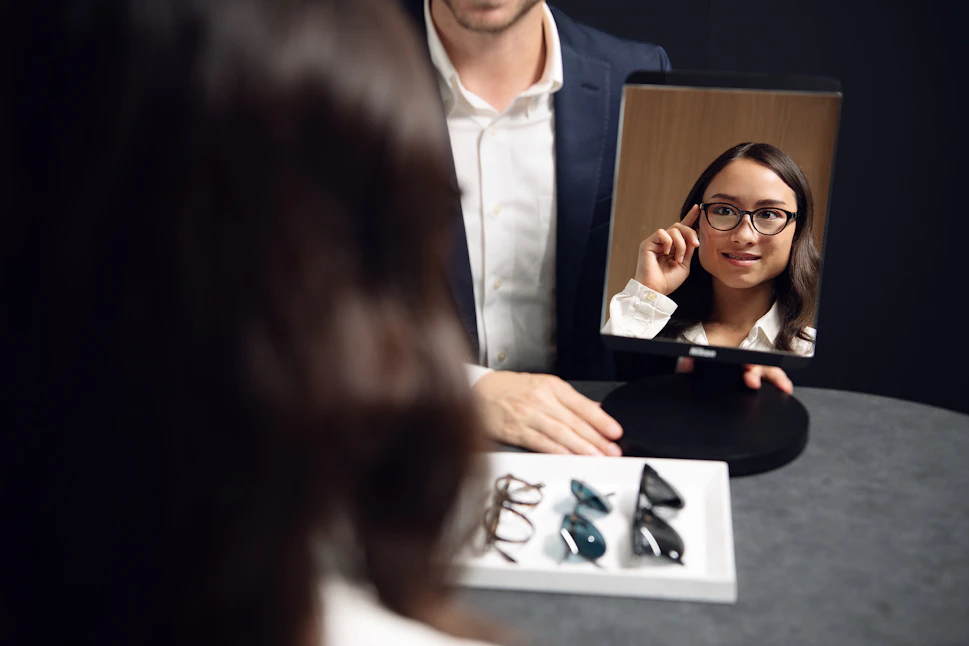
A checklist for buying new eyeglasses
1. Find a local eye care professional and book an appointment
Good eye care goes a long way. Regular eye exams are important to ensure your eyes stay healthy, and a full check can be done in a matter of minutes.
2. Find eyeglasses that go perfectly with your face features.
Frames must fit your facial shape, as well as being resistant and suitable to your prescription lenses. As an expert, your eye care professional will always give you the best advice.
3. Choose the right eyeglass lenses for you
In accordance with your lifestyle
Whether you are in the office, at home or enjoying the great outdoors, there is a pair of lenses to fit every aspect of your life.
How many pairs should I get ?
The number of pairs you need depends on several factors: your vision needs, your budget, and your personal style.
Most people get prescription eyeglasses to correct their vision. Most people wear a pair of prescription glasses for their everyday vision. But there are also specialized lenses that meet more specific needs, such as:
- Computer glasses to reduce eye strain from screens.
- Polarized sunglasses to reduce glare and block harmful UV rays.
- Reading glasses to make close-up vision easier.
- Transitions® lenses if you want responsive lenses that automatically darken outdoors and clear up indoors.
Don’t compromise on UV and blue-violet light protection¹ !
1. Blue light between 380nm to 500nm (with blue-violet light between 400 and 455nm as stated by ISO TR 20772:2018).