
How Do I Pick The Best Eyeglasses & Sunglasses?
Eyeglasses for near vision and distance vision, progressive lenses, sunglasses, reading glasses or glasses for home: where do I start? What do I need to know?
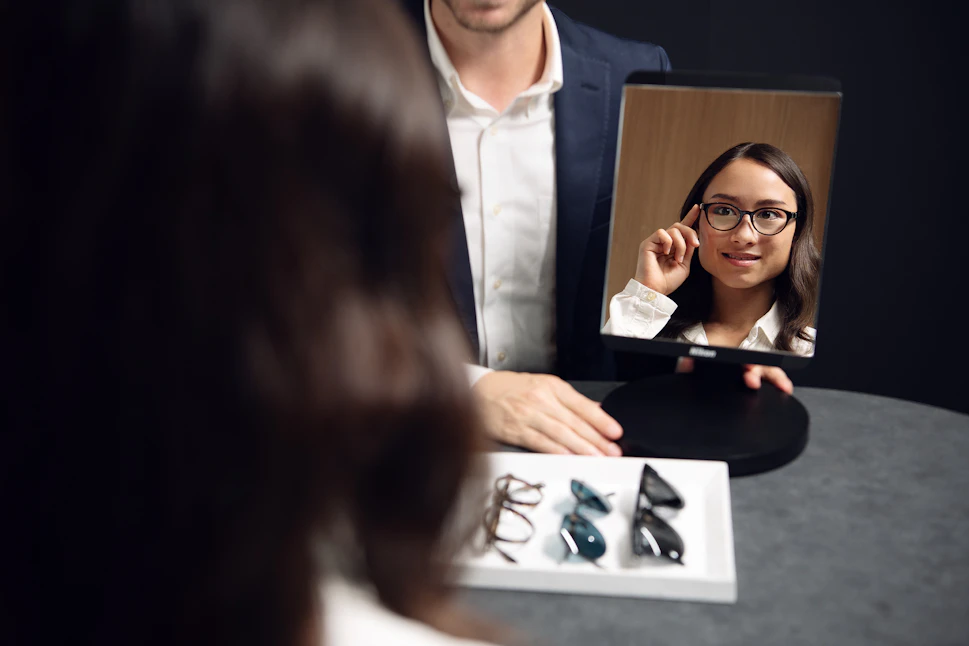
A checklist for buying new eyeglasses
1. Find a good eyecare professional and book an appointment with your optician
Good eye care goes a long way. Regular eye exams are important to ensure your eyes stay healthy, and a full check can be done in a matter of minutes.
2. Find eyeglasses that go perfectly with your face features.
Frames must fit your facial shape, as well as being resistant and suitable to your prescription lenses. As an expert, your eye care professional will always give you the best advice.
3. Choose the right eyeglass lenses for you
In accordance with your lifestyle
Whether you are in the office, at home or enjoying the great outdoors, there is a pair of lenses to fit every aspect of your life.
How many pairs should I get ?
That depends on your vision needs, your vision insurance, your budget – and even your fashion sense. Most people get prescription eyeglasses to correct their vision, but other specialty eyewear includes: glasses to reduce eye strain when doing near vision activities, polarized sunglasses to reduce glare and block ultraviolet rays, readers to help you see up close, and Transitions® lenses if you are looking for the most responsive lenses that can automatically adapt to changing light conditions.
Don’t compromise on UV and blue light¹ filtering!
1. Blue light between 380nm to 500nm (with blue-violet light between 400 and 455nm as stated by ISO TR 20772:2018).